
Are Live Casino Games a Threat to RNG?
Over the past decade, the iGaming industry has witnessed a major evolution. What began as a digital replication of land-based games using Random Number Generators (RNG) is now rivaled by immersive, high-quality streams featuring live dealers. This isn’t just a shift in technology — it’s a deeper change in how players engage with online casinos.
From Algorithms to Real Dealers
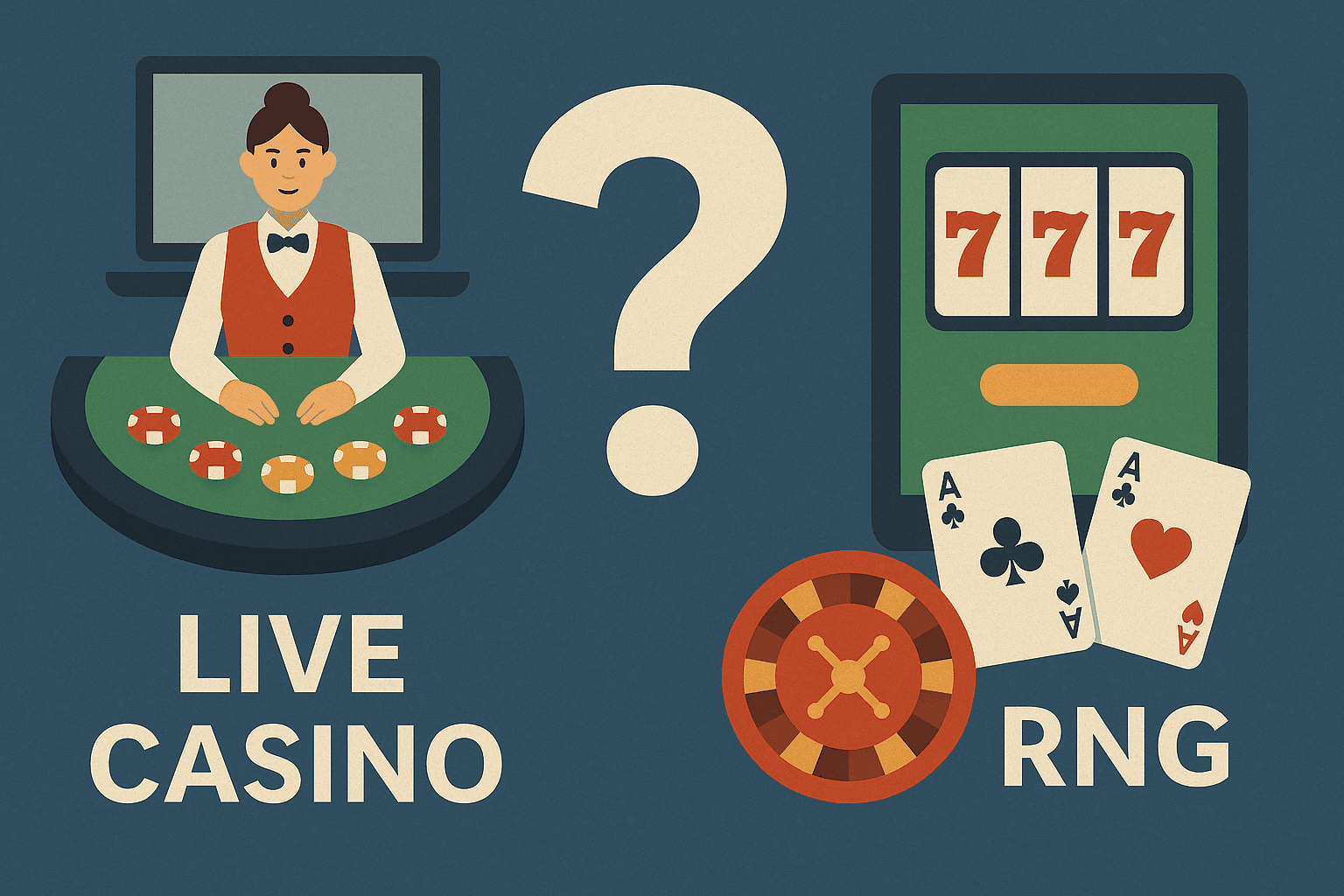
The transition from RNG to live dealer games was gradual but steady:
- 2003–2006: First-generation live casino games emerged with single-camera setups
- 2007–2010: Multi-angle views enhanced visual engagement
- 2011–2014: HD streaming became a new standard
- 2015–2018: Mobile optimization expanded accessibility
- 2019–2022: Game show-style formats blurred the line between entertainment and gambling
- 2023–2025: Augmented and virtual reality integration began transforming gameplay into a hybrid experience
Today’s live casino studios operate more like professional broadcast centers than simple game rooms. Multiple camera angles, real-time chat, and seamless streaming have set a new bar for immersion.
The 2025 Reality: Rising Demand for Live Experiences
So why is this relevant now? Because the numbers speak for themselves. The live casino segment is growing more than twice as fast as RNG-based gaming.
- Live dealer market growth: ~15% annually
- RNG-based game growth: ~7% annually
- Marketing budgets: 40% now allocated to live casino promotions
- Player preferences:
- 62% of players under 35 favor live casino formats
- Session durations are 2.3x longer with live dealers
- Average bet sizes are 30% higher in live dealer games
Clearly, the momentum has shifted — especially among younger demographics who value interaction and realism over automated play.
Are RNG Games Becoming Obsolete?
Not quite. Despite live casinos gaining traction, RNG-based games remain essential for several reasons:
- Availability: RNG games are accessible 24/7 with no dealer shift limitations
- Speed: Gameplay is faster, ideal for players with limited time
- Cost-effectiveness: RNG titles require less infrastructure and maintenance
- Game variety: Thousands of slot titles and table variants rely on RNG logic
- Player habits: A sizable segment of users still prefers solo gaming without social interaction
In other words, RNG isn’t disappearing — it’s adapting. Some developers now embed live-stream overlays or real-time leaderboards into RNG slots to create hybrid experiences. Others are exploring AI-driven dealers as a bridge between automated logic and live interaction.
The Strategic Response

Operators and suppliers are responding in two key ways:
- Portfolio Diversification: Rather than choosing one format, most brands are offering both, letting players switch based on mood or device.
- Tech Innovation in RNG: Modern RNG games now feature cinematic intros, branded narratives, and cascading mechanics to boost engagement.
Regulators are also watching closely. Live casinos introduce new compliance challenges: fraud detection, player verification, and responsible gambling policies must now account for human dealers and real-time decisions.
Conclusion
Live casino games are not replacing RNG — they’re reshaping the ecosystem. Both formats serve different user needs and will likely coexist in the foreseeable future. However, the shift in player expectations and engagement metrics means that innovation is no longer optional for RNG developers.
To stay competitive, online casinos must balance immersive realism with fast, frictionless gameplay — and deliver both with equal excellence.